
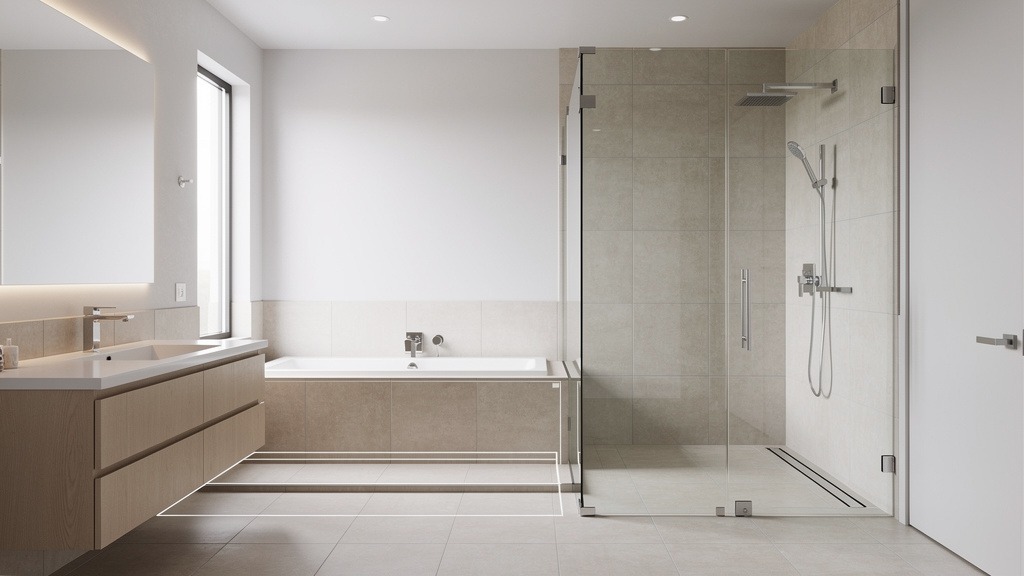
Understanding Bath and Shower Conversion Types
Swap out your tired tub setup for something that actually works with how you live now.
Easier Access
Low-threshold and barrier-free options designed for safety and long-term mobility needs.
Modern Function
Create more space and a contemporary look that eliminates the dated 1990s aesthetic.
Low Maintenance
Choose materials that are easy to clean and resistant to mold and grout scrubbing.
The main conversion options and when each one makes sense
Tub to shower conversions replace that old bathtub with a proper shower setup. Creates more space, feels more open, and honestly? Way easier to use for most people.
- Standard walk-in shower with low curb – easier to step over than a traditional tub edge. Pretty straightforward upgrade.
- Barrier-free shower conversion – no curb at all, completely flush with the floor. Looks amazing, but your contractor needs to really know what they’re doing with drainage and floor prep.
- Full walk-in shower – the whole nine yards with glass doors, built-in storage, room to actually move around.
You’ll also pick between prefab shower kits versus custom tile work. Custom tile? Unlimited design options, but expect more labor time and ongoing maintenance down the road.
What actually happens during installation
A good crew follows a logical sequence. No shortcuts, no surprises.
- 1
Demo day – out with the old tub, including hauling it away (make sure someone’s handling disposal).
- 2
Plumbing adjustments – moving drains, updating valve positions, basically making sure water goes where it should.
- 3
Waterproofing – this is the invisible stuff that keeps water from rotting your house. Skip this step at your own peril.
- 4
New base and walls go in – plus sealing every single joint and transition.
- 5
Installation day logistics – expect noise, dust (good crews contain it), water getting shut off periodically, and a final pressure test before they call it done.
Money talk – what drives the final number
Tub to shower conversion costs bounce around based on several factors:
- What you pick for materials (basic surround vs. fancy tile vs. glass panels vs. antimicrobial surfaces).
- How much demo and labor the job actually needs.
- Whether plumbing has to move, and how much floor work barrier-free access requires.
Comparing Tub to Shower and Walk-In Tub Conversions
Tub to shower conversions prioritize quick access, easy cleaning, and more usable space. Walk-in tub installations focus on seated bathing and therapeutic features for comfort.