
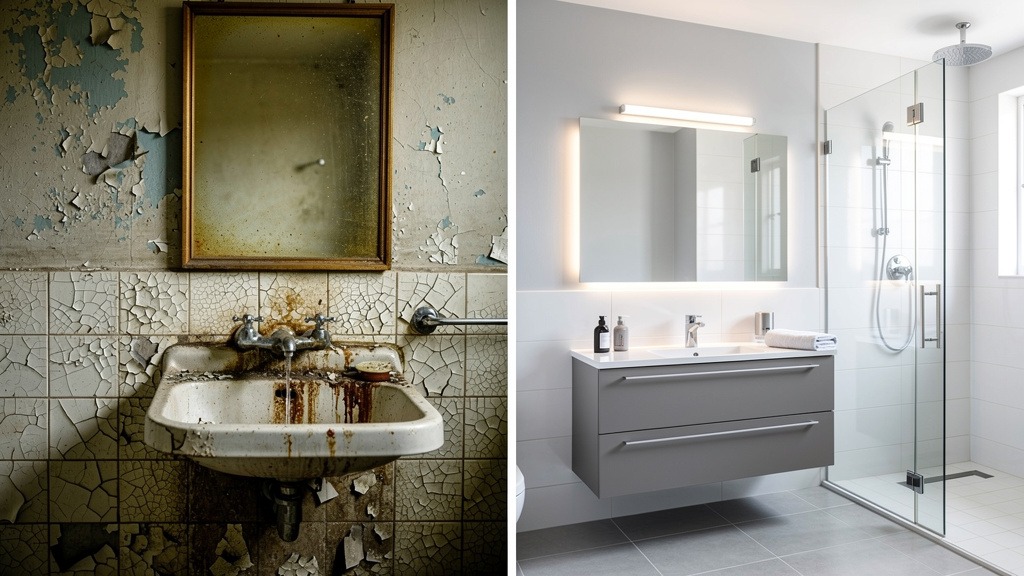
Spotting the Difference: Touch-Up vs. Overhaul
Understanding whether your bathroom needs surface love or a structural reset is the first step to protecting your home’s value and your budget.
The Touch-Up
Cosmetic focus. Keeps the layout and plumbing exactly where they are while refreshing what you see and touch.
The Overhaul
Structural reset. Opening walls, rebuilding waterproofing, and updating systems that are failing behind the scenes.
The Gut-Check
Identify red flags like hollow tiles, recurring mold, or spongy floors before they drain your savings account.
Warning Signs Your Bathroom Needs the Full Treatment
When the same problems keep showing up after you’ve caulked, painted, and swapped out hardware, that’s your bathroom telling you something. The biggest red flag? Problems that keep coming back – moisture sneaking behind tile, mold that won’t quit, floors that feel spongy underfoot.
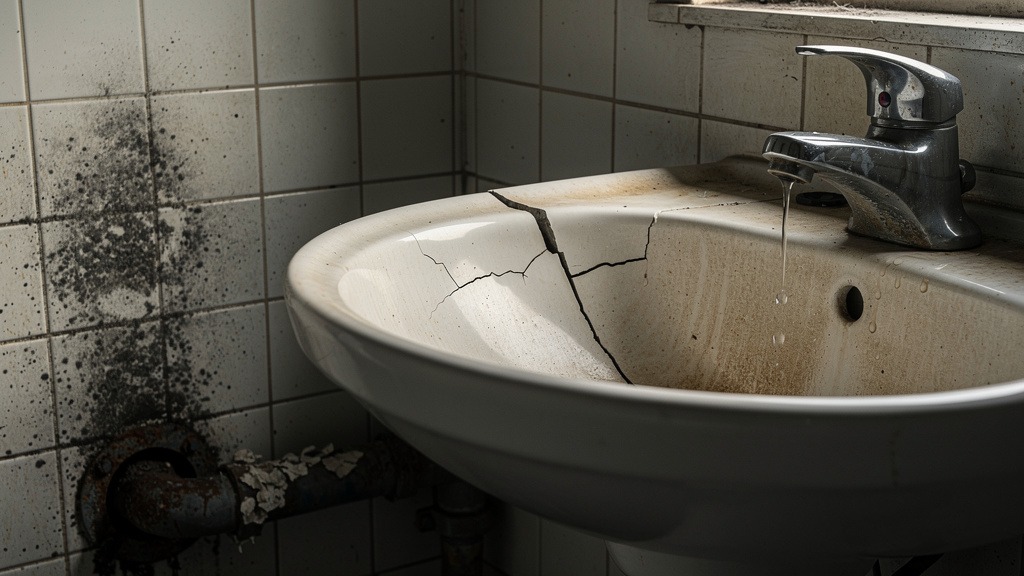
Red flags that mean you need to go all the way
-
Mold that keeps coming back no matter what you spray on it, especially around the shower area or exhaust fan.
-
Signs of water damage like soft drywall, bubbling paint, or mysterious ceiling stains below.
-
Leaks that won’t stay fixed despite replacing cartridges or tightening fixtures.
-
Structural instability such as tile that moves when you step on it or crumbling grout.
When Your Bathroom Works Against You Every Day
If your bathroom makes your morning routine harder instead of easier, design isn’t just “cosmetic” anymore. Constant clutter, bumping into doors, and a look that makes you cringe point to layout problems that a simple coat of paint can’t fix.
Touch-Up Fixes
Best when the layout works but you need more storage or a style update. Includes shelving, vanity swaps, and new lighting.
Overhaul Solutions
Best for moving walls, relocating plumbing, and building custom storage to fix a layout that never worked in the first place.
Renovation Costs and Realistic Expectations
The right question isn’t “What’s the average cost?” It’s “What work does this bathroom actually need to make the results last?”

Targeted Touch-Up
Focuses on surface-level issues. Best when the bathroom functions well but looks dated.
Complete Reset
Proper coordination, new tile, and waterproofing. A real reset for long-term value.
Layout Changes
Custom work, moving plumbing lines, and structural upgrades for maximum ROI.
Permits and Common Mistakes
Permit questions aren’t just paperwork – they affect your timeline and budget. The goal is straightforward: no work stoppages and no expensive rework.
-
1
Define Scope: Write out exactly what’s moving and what’s staying in plain English.
-
2
Call Local Building Dept: Ask directly if your specific scope requires a permit.
-
3
Assign Responsibility: Get it in writing whether you or your contractor is handling the filing.
Common Questions Answered
What does a lower-budget renovation include?
In most homes, this covers a targeted update where plumbing and layout stay exactly where they are. Money typically goes toward visible improvements like vanity replacement, paint, and lighting rather than structural repairs.
When should I renovate instead of just refreshing?
Choose complete renovation when problems keep coming back, involve hidden damage, or create safety concerns. Red flags include mold that returns after cleaning, spongy spots, or leaks that reappear.
Do I need a permit for my bathroom?
Permit requirements depend on scope, especially when changing regulated systems like plumbing, electrical, ventilation, or structural elements. Confirm requirements early to keep your timeline on track.