
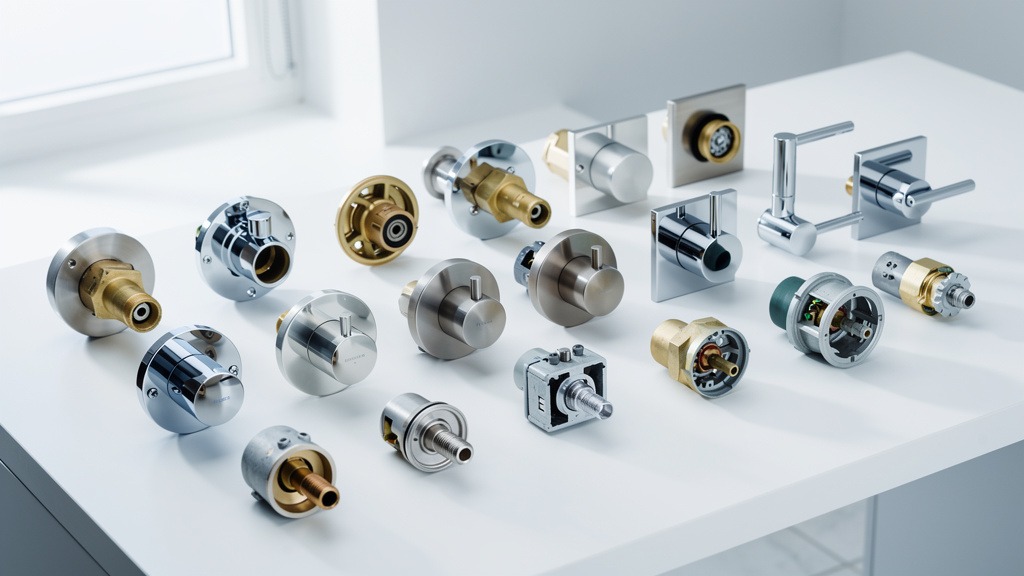
The Brain of Your Shower Setup
Understanding your shower valve is the first step toward a successful bathroom renovation. It sits behind your wall, managing flow and temperature to keep your daily routine stress-free.
Safety First
Internal mixing cartridges prevent temperature haywire when water pressure shifts elsewhere in the house.
The Rough-In
The rough-in body is the foundation of your plumbing, connecting hot, cold, and outlet ports.
Precise Control
From flow rates to multiple outlets, your valve choice determines how your shower performs every day.
Understanding How Shower Valves Work
Your shower valve? It’s basically the brain of your entire shower setup. Sits there behind your wall, doing all the heavy lifting with this internal mixing cartridge that keeps your water flowing and your temperature from going haywire when someone flushes the toilet downstairs.
Pretty smart little device, honestly.
The Rough-In Valve Lives Inside Your Wall
Here’s the thing most people don’t realize – that valve you never see is called the rough-in body. It’s got these connection ports for hot water, cold water, and whatever outlets feed your shower stuff.
Shower Trim Kits Aren’t Universal
Big mistake people make? Assuming any trim kit works with any valve. Nope.
Your trim kit – that’s your handle, the cover plate (escutcheon, if we’re being fancy), and the visible shower head – only plays nice with specific valves. Even when they look identical.
Think of it like this:
- Pick your rough-in valve platform first
- Find trim that’s actually made for that valve family
- Get your plumber to double-check compatibility before tile goes up
Planning Flow Rates and Multiple Outlets
Want to run a rain head AND body sprays without your temperature going nuts? Your valve choice matters more than you think.
Most builders end up choosing between thermostatic and pressure-balancing valves based on control needs. Thermostatic ones? They’re usually better for multi-fixture setups because they focus on holding steady temperature while you switch between outlets.
Also – and this is important – check your total fixture demand in GPM. Both your valve and your fixtures need to match what you’re actually planning to use.
Now that we’ve covered the basics, let’s dig into the main types of shower valves that keep your water temperature and pressure under control.
Pressure Balancing Shower Valves Explained
A pressure balancing valve is your shower’s defense against sudden temperature shocks. When water pressure shifts in your hot or cold lines – like when that toilet gets flushed – this valve jumps into action and adjusts the mix so you don’t get blasted with scalding water.