
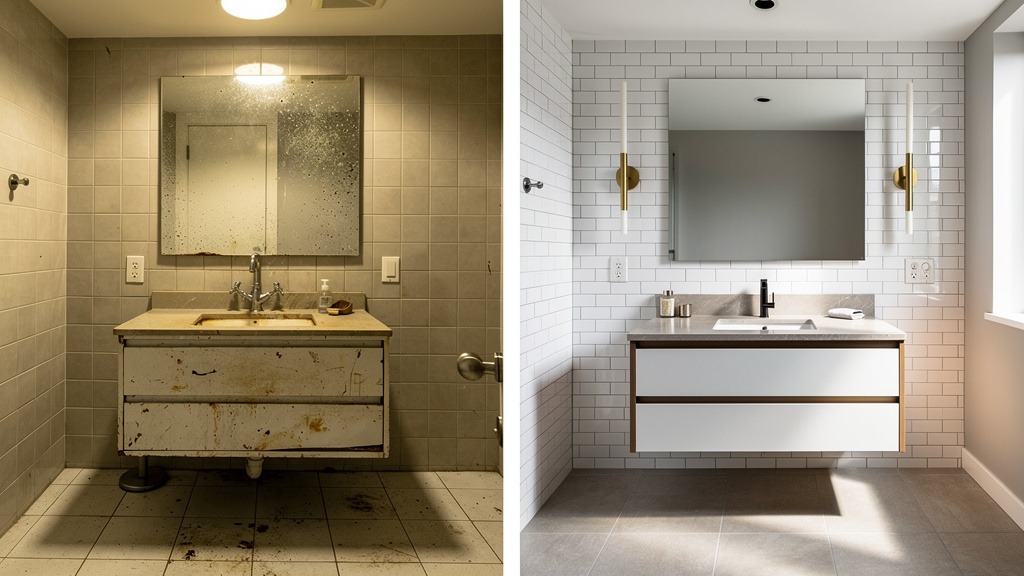
Design Cues That Read Expensive
The difference isn’t about buying premium everything. It’s about nailing the visual cues that actually matter: clean lines, repeating finishes, and intentional layouts.
Cohesive Paint
Fresh paint in a calm, consistent shade works magic—especially when you don’t skip the trim and ceiling.
Feature Walls
One standout surface changes everything. Pick one focal point, like vertical subway tiles, not three competing ones.
Matched Fixtures
Matching finishes across faucets, shower trim, and towel bars creates a cohesive, “planned” appearance.
Make the Layout Feel Deliberate
Here’s what drives me crazy about most bathroom refreshes: people add stuff instead of editing what’s already there. A “high-end” feel usually comes from subtraction, not addition.
If your current layout works functionally, refinishing and strategic swaps often deliver better results than rearranging plumbing. Moving a toilet costs more than replacing a vanity, and the visual impact might not justify the expense.
Practical constraints to respect
- Lighting: Plan your lighting scheme before finalizing tile and paint selections to avoid dull finishes.
- Refinishing: Works brilliantly on stable surfaces, but fix underlying moisture or structural issues first.
- Greenery: Add a small plant only if the spot won’t get constantly soaked.
Step-by-Step Budgeting Process
Once you’re clear on the distinction between “musts” and “wants,” the numbers stop feeling overwhelming and start feeling manageable.
-
1
Lock the layout first. Keeping your toilet, shower, and vanity in their current spots is often the biggest cost control lever you have.
-
2
Decide what gets replaced versus refinished. If your vanity box is structurally solid, refinishing can stretch your budget significantly.
-
3
Choose one “hero” upgrade. Pick your star player—be it a vanity with amazing storage or a clean tile feature wall.
-
4
Assign a contingency line item. Older homes love revealing surprises. Plan for it so your project stays stress-free.
Where to Splurge vs. Save
Splurge On
Items affecting daily use: Vanity and sink, layered lighting, and high-quality shower fixtures.
Save On
Easily swappable items: Paint colors, mirrors, decorative elements, and simple open shelving.
Small Bathroom Planning
Small rooms need tighter planning because every decision shows. Think vertical: recessed niches, tall cabinets, and shelving above the toilet. Consider space-saving fixtures like compact vanities or wall-mounted toilets to increase floor visibility.
Materials That Change Perceived Value
Paint
Use moisture-rated paint in calm tones to make walls look freshly detailed.
Tiles
Simple field tile used broadly with one deliberate feature wall.
Mirrors
Larger mirrors with thin frames bounce more light and reduce visual noise.
Frequently Asked Questions
What is a realistic budget for a bathroom renovation?
Realistic budgets start with defining scope before falling in love with finishes. Separate “musts” (waterproofing, electrical, ventilation) from “wants” (designer fixtures). Check out our bathroom renovation before and after gallery for real-world examples.
What upgrades are most regretted on a budget?
Regret usually comes from prioritizing looks while skipping function. Common pain points include:
- Insufficient storage leaving counters cluttered.
- Poor lighting at the vanity for daily tasks.
- Skipping refinishing on sound structures to buy trendy tiles.
The Vanity Transformation
A vanity change delivers some of the fastest visual transformation without opening walls. It controls your storage and sets the tone for the entire room. See our master bathroom remodel before and after results for inspiration.
Refinish vs. Replace
Refinish if the structure is solid. Replace if doors sag or proportions are wrong for the room.
Hardware & Paint
Pair moisture-resistant paint with new vanity hardware that matches your matched fixtures.
Countertop Choice
The vanity countertop is your finish line. Quartz remnants or quality laminate are great budget picks.